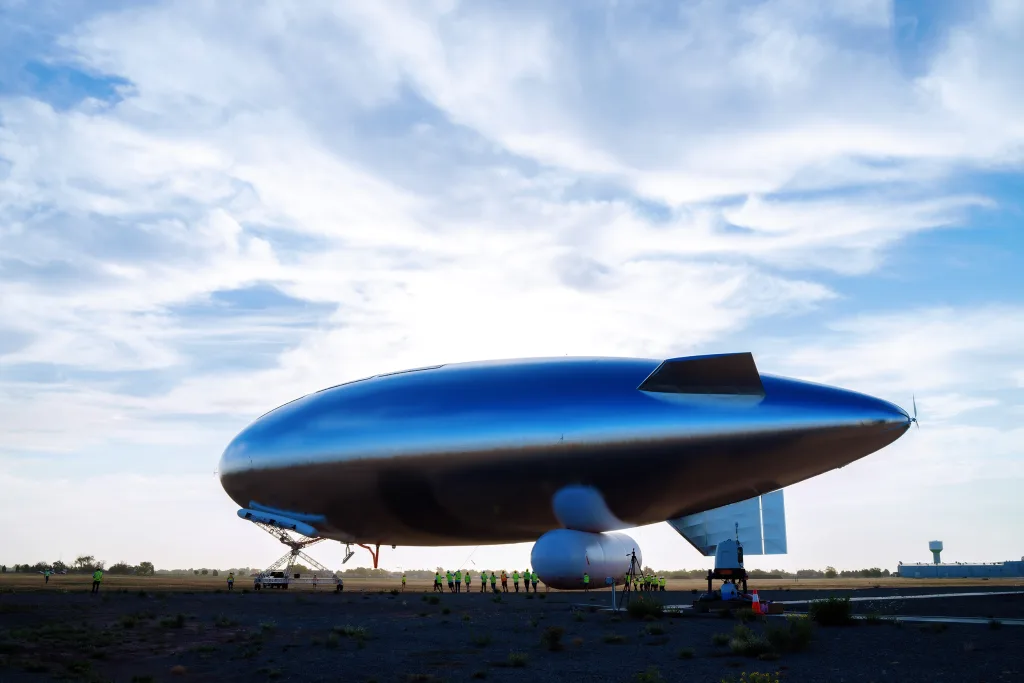
How Do Sceye's Stratospheric Airships Examine Greenhouse Gases
1. The Monitoring Gap Could Be Bigger That Most People Are Acquainted With
Emissions of greenhouse gases from the global atmosphere are tracked by way of a network of ground stations, periodic flight campaigns by aircraft and satellites operating hundreds and kilometres above the earth's surface. Each has limitations. Ground stations are not as extensive and are primarily oriented towards wealthy countries. Aircraft operations are costly in duration, are short-term, and limited in coverage. Satellites can reach the world, but struggle to achieve the spatial resolution required to identify specific emission sources like for example, a leaky pipeline, landfill venting methane, an industrial facility not reporting its output. The result is monitoring systems that have serious blind spots at exactly the extent where accountability and control have the greatest impact. Stratospheric platforms are increasingly being perceived as being the missing middle layer.
2. Altitude provides a monitoring advantage Satellites can't duplicate
There's a mathematical argument why 20 kilometres beats 500 kilometres to monitor emissions. Sensors operating from stratospheric altitude can observe a ground footprint of several hundred kilometres while remaining close enough to recognize emission sources with meaningful resolution — the individual facilities, road corridors, agricultural zones, and so on. Satellites scanning the same region from the low Earth orbit are able to cover it more quickly but with lower granularity and revisit times mean a methane plume that is visible and fades away in a matter of hours won't get captured. A device that stays above an area of interest for days or weeks in a row transforms periodic snapshots into something closer to continuous surveillance.
3. Methane is the most important target with a good reason
Carbon dioxide is the one that gets most of the media attention, but methane is the greenhouse gas where future monitoring improvements could make the biggest practical difference. Methane's power is considerably greater than CO2 over a twenty-year period and a large portion of anthropogenic methane emissions come through point sources — pipelines for oil and gas along with waste facilities and agriculture operations — which can be detected and, in many instances, repairable when they are discovered. Monitoring methane in real-time from a persistent stratospheric platform means that regulators, operators and governments can identify leaks as they happen, rather than finding them in the months following annual inventory reconciliations which typically rely on estimates, not measurements.
4. Sceye's Airship's design is well Fit for the Monitoring Mission
The traits that make for an excellent telecommunications platform as well as an effective environmental monitoring platform combine more than one might think. Both require long endurance as well as stable positioning and meaningful payload capacity. Sceye's lighter than air airship model takes care of all three. Since buoyancy takes care of the basic function of staying in the air and sustaining the aircraft's energy consumption, the budget isn't drained by the process of generating lift and is available to power propulsion, station maintenance, and powering whatever sensor needs to be used for the mission. Particularly for monitoring greenhouse gas emissions that means carrying imaging systems, spectrometers as well as data processing hardware that doesn't have the brutal weight constraints for fixed-wing HAPS models.
5. Station Keeping Must Be Non-Negotiable in order to collect valuable environmental information
Monitoring platforms that drift is a platform for monitoring, producing data that's difficult to interpret. Knowing exactly where a sensor was when it recorded a reading is crucial to assign the source of the reading. Sceye's emphasis placed on accurate station keeping – holding a fixed position above a targeted area using active propulsion isn't just one of the metrics used to measure performance. It's why the data is scientifically substantiable. Stratospheric earth observation is real-time useful for regulatory and legal reasons when the spatial record is stable enough to stand to scrutiny. Drifting balloon platforms no matter how powerful their sensors are, don't offer that.
6. The same platform is able to monitor Oil Pollution and Wildfire Risk Simultaneously
One of many compelling aspect of the multipayload model is that the various environmental monitoring missions can complement one another on in the same automobile. An airship that operates over oceans or the coast can carry sensors that are calibrated for detection of oil pollution, as well as those that monitor CO2 or methane. On land, the same platform architecture is able to support wildfire detection technology, which identifies heat signatures, smoke plumes as well as stress indicators for the vegetation that can be used to predict ignition events. Sceye's approach for mission design will not treat them as separate missions that require separate aircraft, but as parallel use cases for infrastructure already placed and operational.
7. Detecting Climate Disasters in Real Time Changes the Response Equation
There's a distinct difference between knowing a wildfire started at least six hours ago, and being aware it started about twenty minutes earlier. Similar to industrial accidents that release dangerous gases, flooding incidents with a potential to damage infrastructure, as well as sudden methane release from the permafrost. Being able to identify climate catastrophes in real in time by a continuous stratospheric monitoring platform offers emergency managers along with government agencies and industrialists an opportunity to intervene that doesn't occur when monitoring is based on ground-based or satellite revisit cycle reports. The significance of this window grows as you think that the early phases in most environmental emergencies in the same timeframes when intervention is most effective.
8. Its Energy Architecture Makes Long Endurance Monitoring Possible
Environmental monitoring missions only deliver their greatest value if the platform is stationed long enough so that it can create significant data records. The methane level for a week in an oil field will tell you something. Months of uninterrupted data can tell you something real-time and actionable. For that to happen, you need to address the problem of power consumption during the nightthe platform has to be able to store enough power during daylight hours to power all of its systems throughout the night, without affecting the position or sensor operation. Innovations in lithium sulfur battery chemistry, with energy densities around 425 Wh/kg and an improvement in solar cell efficiency create a closed power loop attainable. While without both of them, endurance remains an aspiration, not an actual requirement.
9. Mikkel Vestergaard's Personal Background explains the Environmental Importance
It's worth understanding why a corporation that operates in the stratospheric space sector puts a prominent emphasis on greenhouse gas monitoring and disaster detection, rather then focusing exclusively on connectivity revenue. Mikkel Vestergaard's track record of applying technology to massive environmental and human-related issues gives Sceye the foundational stance that decides what missions the company prioritizes and how it portrays its platform's goals. The capabilities for monitoring the environment don't serve as a second payload to bolt onto an automobile that's a telecoms one appear more socially responsible. They are a true belief that the stratospheric system should be conducting climate work, and that the same platform could achieve both without compromising the other.
10. Data Pipeline Data Pipeline Is as Important as the Sensor
Monitoring greenhouse gas levels from the stratosphere's atmosphere is only one part of the challenge. getting the data to individuals who require it in a form they can act on, in something close to real time, is the second part. A stratospheric-based platform with onboard processing capabilities, as well as a direct link to ground stations can narrow the time between detection and action as compared to systems which batch data to be later analyzed. For natural resource management applications for regulatory compliance monitoring or emergency response, the timing of the data can be a factor just as accuracy. Building that data pipeline into your platform's framework from the beginning, instead of putting it off as an afterthought is one of the things that makes stratospheric earth observation serious from unproven sensor campaigns. Take a look at the recommended Sceye Inc for site advice including Stratosphere vs Satellite, space- high altitude balloon stratospheric balloon haps, sceye haps status 2025 2026, sceye haps project updates, what is haps, HAPS investment news, Stratospheric broadband, Beamforming in telecommunications, what does haps stand for, detecting climate disasters in real time and more.
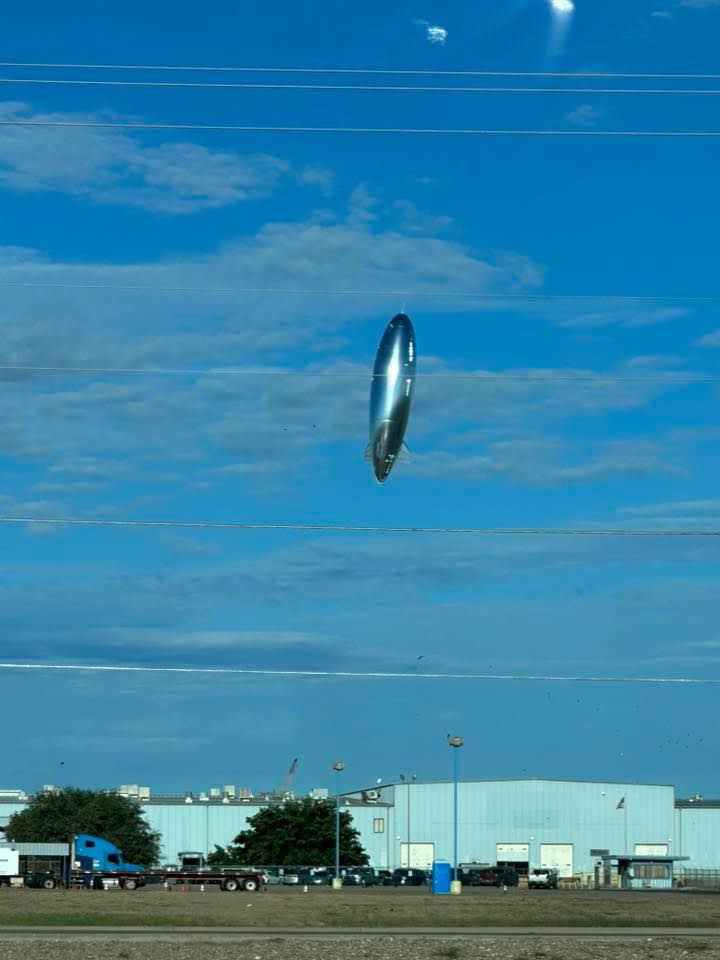
Mikkel Vestergaard's Vision Behind Sceye's Aerospace Mission
1. It's a largely under-rated factor to Aerospace Company Outcomes
The aerospace industry produces two broad categories of companies. The first is built around the search for applications of technology — a capability in engineering in search of a marketplace. It starts with a concern that's relevant and works in reverse to the technologies needed to tackle the issue. The distinction sounds abstract until you examine what each kind of company is actually building as well as the types of partnerships it has and how it compromises when resources are strained. Sceye belongs to the second category. knowing the importance of orientation is crucial to understand why the company chose the specific choice in its engineering strategy — lighter-than-air design, multi-mission payloads, emphasis on endurance, as well as a founding location within New Mexico rather than the coastal aerospace clusters that attracted many venture-backed space businesses.
2. The Issue Vestergaard Started With Was Bigger Than Connectivity
Most HAPS companies frame their primary narrative on telecommunications. The connectivity gaps the lost billions, the business of connecting remote communities without access to infrastructure on the ground. These are important and real issues, but they're commercial problems with commercial solutions. Mikkel Vestergaard's starting point was different. His expertise in applying modern technology to human and environmental issues led to a foundational view at Sceye where connectivity is seen as an outcome of stratospheric networks instead of its primary purpose. Monitoring of greenhouse gas emissions in addition to disaster detection, Earth observation monitoring of oil pollution, and management of natural resources were part of the mission's infrastructure from the beginning. These were not features added later to make a platform for telecoms appear more socially-conscious.
3. The Multi-Mission Platform is a direct expression of that Vision
When you recognize that the first question that was asked was how the stratospheric networks could address largest problem of connectivity and monitoring simultaneously, the multi-payload system becomes a shrewd business strategy and appears as the natural answer to that question. A platform that carries devices for communication, and also real-time methane monitoring sensors as well as wildfire detection technology isn't trying make itself available to everyone It's expressing an understanding that the problems that need to be solved from the stratosphere are interconnected, and that a vehicle that can address a number of them simultaneously is more aligned with the goals than a platform created for a specific revenue stream.
4. New Mexico Was a Deliberate decision, not an accident One
Sceye's presence in New Mexico reflects practical engineering demands — airspace accessibility, atmospheric testing conditions, altitude capabilities — but also conveys something about the company's character. The established Aerospace clusters found in California and Texas attract companies whose primary clients are investors, defense contractors, and the media industry that surrounds them. New Mexico offers something different and that is the physical space needed for the actual task of developing and testing stratospheric light-than-air systems without the performance pressure of being close to the people that fund and write about aerospace. Among aerospace companies within New Mexico, Sceye has created a research and development program centered towards engineering validation instead of public narrative. A decision that shows a founder who is who is more concerned about how well the platform performs instead of if it can generate impressive announcement cycles.
5. Endurance as a Design Priority Represents a Long-Term Mission Focus
Short-endurance HAPS platforms are interesting to see how they work. Long-endurance platforms can be described as infrastructure. The importance placed on Sceye long-term endurance — creating vehicles that can keep stations for months or years instead of days represents a founding father's recognition that the problems worth solving from the stratosphere aren't solved by themselves in between flight missions. Greenhouse gas monitoring that is operational for a few weeks and then is shut down, creates a document with no scientific or regulatory significance. It is a requirement for a platform to be repositioned and relaunched after each deployment isn't a permanent early warning layer that emergency managers need. The endurance specifications are an assertion of what a need for the mission is and is not a performance measure which is used solely for its own benefit.
6. Humanitarian Lens Shapes Partnerships Humanitarian Lens Shapes Which Partnerships Get Prioritised
A partnership with every partner is worth pursuing, and the criteria used by companies to evaluate prospective partners is an indication about its objectives. Sceye's agreement with SoftBank to operate Japan's nationally-recognized HAPS network -which aims to provide early commercial services in 2026it is unique not only for its commercial scale, but for its alignment with an actual country that requires the capabilities that the stratospheric network provides. Japan's seismic sensitivity, complicated geography, and national policy of environmental monitoring makes it an ideal setting for deployment, where the platform's multi-mission capabilities fulfill the real need rather than generating revenue in a market that already has adequate alternatives. That alignment between commercial partnership as well as mission purpose is not accidental.
7. Financial investment in Future Technologies Requires Conviction About the Challenge
Sceye operates in a developmental environment that the technologies it is relying on (such as lithium-sulfur storage batteries at 425 Wh/kg of energy density, high-efficiency solar cells designed for stratospheric aircraft, and advanced beamforming technologies for stratospheric telecoms antennas — are all at the frontier of what's feasible today. Building a business plan around technologies which are improving, but are not yet fully mature needs a founder with a sufficient understanding of the significance of the issue to justify the time-based risk. Vestergaard's faith that the stratospheric internet will soon become a permanent element of global connectivity and monitoring is what motivates investment in future technologies that don't meet their full capabilities until the technology they allow is already flying commercially.
8. Its Environmental Monitoring Mission Has Become More Important Since Its Founding
One of the benefits of forming a firm around an actual problem rather than an emerging technology trend is that the issue is likely to grow more or less significant with time. When Sceye was first established, the argument for ongoing monitoring of stratospheric greenhouse gases along with wildfire detection the monitoring of disasters in the climate was convincing in principle. In the years since there has been an increase in the number of wildfires, increasing methane emission scrutiny under international climate frameworks and the actual inadequacy of our existing monitoring infrastructures have all bolstered that case considerably. The vision for the first time hasn't needed to be rewritten to stay pertinent- the world has moved toward it.
9. The Careers at Sceye demonstrate on the Breadth of the Mission
The range of disciplines required for the development and operation of stratospheric-based platforms for multi-mission requirements is far greater than most aerospace programmes demand. Sceye careers span atmospheric science, materials engineering, technology for power systems, telecommunications Remote sensing and software creation and regulatory affairs – which is a multidisciplinary approach that highlights the vastness of what the platform is designed to accomplish. Companies based on a single-use technology are more likely to recruit within that technology's field. Companies whose core is a problem that requires a range of technologies to solve hire across the boundaries of these disciplines. The type of candidate Sceye attracts and develops is an expression of the founding vision's scope.
10. The Vision Functions Because It's Specific about the Issue But not the Solution
The most robust founding visions in technology companies are precise regarding the issue they're trying to solve and flexible in their approach to solutions. Vestergaard's framework — which is a persistent stratospheric infrastructure that monitors, connectivity, and environmental monitoring — is specific enough to generate clear engineering requirements and clear partnerships criteria, while being flexible enough allow for the development of new technologies to enable. As battery chemistry improves with the advancement of solar cell efficiency and HIBS standards become more mature, and as the regulatory framework for stratospheric operations grows, Sceye's mission is not changing, but the means to accomplish that mission can use the most advanced technology available at every stage. The structure — fixed on the issue but adaptable on the solution — is what gives the aerospace mission consistency across the development timeline with a measurement in years instead of the cycles of a product. See the top Real-time methane monitoring for more advice including natural resource management, Sustainable aerospace innovation, high-altitude platform stations definition and characteristics, Mikkel Vestergaard, Sceye stratosphere, Sceye Inc, Stratosphere vs Satellite, stratospheric internet rollout begins offering coverage to remote regions, marawid, whats haps and more.